Coordinating Slot Volatility Databases with Bonus Catalog Streams via Customized Directory Protocols in Wagering Information Platforms
Iris Simon · Sep 28, 2026
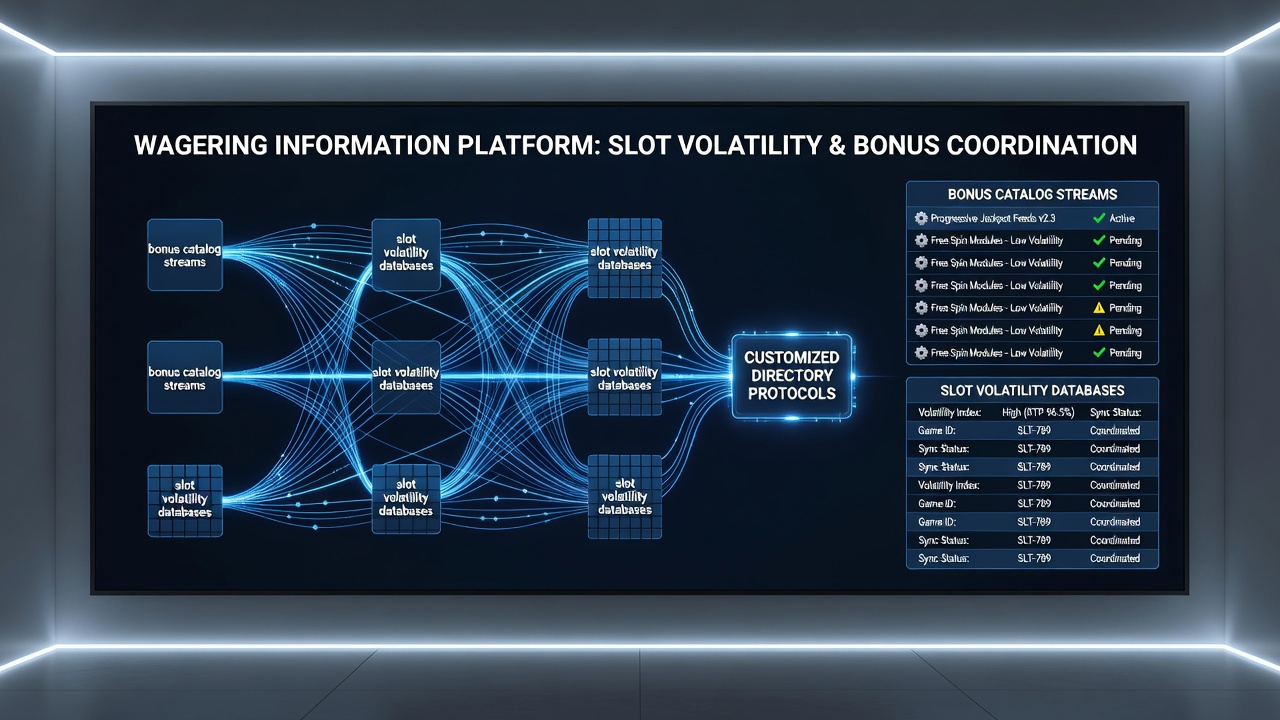
Coordinating Slot Volatility Databases with Bonus Catalog Streams via Customized Directory Protocols in Wagering Information Platforms
Platform operators in the wagering sector maintain separate systems for tracking slot volatility metrics and managing bonus catalog entries, yet integration challenges arise when these datasets operate in isolation. Customized directory protocols address this gap by establishing structured pathways that allow volatility indexes to update in tandem with promotional streams, ensuring that review sites deliver consistent data across user searches and filtering tools. Data from industry reports shows that platforms using such protocols experience fewer mismatches between listed game variance levels and associated bonus terms, particularly as content volumes expand through September 2026.
Database Structures for Volatility Tracking
Slot volatility databases store numerical ranges that quantify payout frequency and size distribution across thousands of titles, with entries typically organized by game ID, provider, and return-to-player percentages. Researchers at academic institutions studying digital gaming systems have documented how these databases rely on relational tables that link volatility scores to historical performance data pulled from regulatory filings. When operators apply customized directory protocols, the system creates hierarchical folders that mirror these tables, allowing automated scripts to pull fresh volatility updates without manual intervention each time a new title enters the catalog.
Directory protocols function through standardized naming conventions and access rules that define how folders receive incoming data streams, which prevents duplication errors when bonus information arrives from separate marketing feeds. Observers note that platforms handling high volumes of slot content often implement version control within these directories so that volatility records remain synchronized with any adjustments to bonus eligibility criteria, such as minimum bet requirements or wagering contributions.
Linking Bonus Catalogs Through Protocol Layers
Bonus catalog streams contain details on free spins, deposit matches, and cashback offers, each tagged with conditions that reference specific game volatility ranges to guide player targeting. Customized directory protocols coordinate these streams by assigning metadata tags that connect bonus records directly to volatility database entries, enabling queries to surface promotions only for games that match desired risk profiles. According to figures from the New Jersey Division of Gaming Enforcement, integrated catalog systems have supported more precise promotional targeting in regulated markets where operators must report accurate game classifications.
One study revealed that directory-based linking reduces latency in content delivery when review platforms refresh their archives, since the protocol layers handle parallel updates rather than sequential imports. Experts have observed that this approach proves especially useful when providers release volatility adjustments mid-cycle, because the directory structure routes changes to both the volatility database and the bonus eligibility flags simultaneously.

Implementation Patterns Across Platforms
Platform developers configure these protocols using lightweight scripting that monitors designated directories for new files, then triggers validation checks against existing volatility entries before committing bonus associations. Those who've studied this know that the process incorporates checksum verification to confirm data integrity across transfers, which becomes critical when multiple regional operators contribute to shared review libraries. Evidence suggests that protocols built around modular directory trees scale more effectively than flat database joins when the number of tracked titles exceeds several thousand entries.
Take one research team that examined North American wagering sites and found directory protocols enabled faster compliance reporting, since volatility and bonus data could be exported together through a single query path. The same team noted that protocols also accommodate regulatory updates from bodies such as the Alcohol and Gaming Commission of Ontario, allowing platforms to flag games whose volatility classifications shift due to rule changes without rebuilding entire catalog indexes.
Maintenance and Data Flow Considerations
Regular audits of directory protocols involve reviewing access logs to confirm that volatility updates propagate to bonus streams within defined time windows, often measured in minutes rather than hours. Data indicates that platforms conducting these audits quarterly encounter fewer instances of outdated promotional pairings, particularly around seasonal campaign launches. Customized protocols further support rollback mechanisms, so operators can revert to prior directory states if a provider submits corrected volatility figures after initial publication.
What's interesting is how these systems handle concurrent access from multiple content teams, since directory permissions can segment read and write rights based on role while still maintaining unified data relationships. Reports from the Canadian Gaming Association highlight that such segmentation supports collaborative workflows without introducing conflicts between volatility records and active bonus terms.
Conclusion
Coordinated directory protocols provide a framework for aligning slot volatility databases with bonus catalog streams in wagering information platforms by establishing clear data pathways and validation steps. Implementation relies on hierarchical structures that accommodate updates from providers and regulators alike, while supporting efficient queries for end users. As platforms continue to expand their content libraries through September 2026, these protocols offer a method for maintaining consistency across technical and promotional datasets without requiring wholesale system replacements.